
Exploring Complexity
Daniela on the Art of Design, Systems and Getting Curious

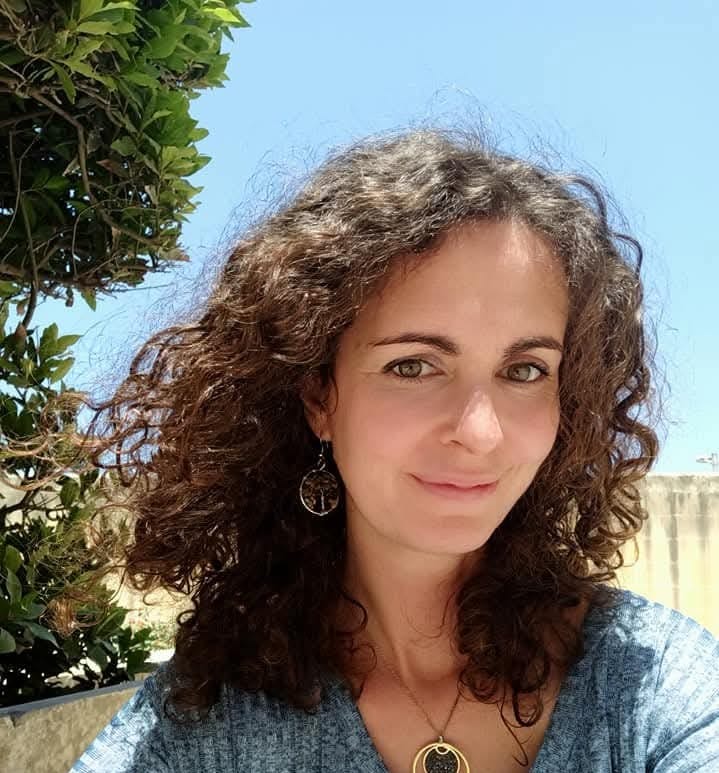
Daniela Quacinella is a design researcher and systems thinker having spent 10 years specialising in design innovation and environmental design. At the Rooted in Nature retreat, she will be guiding us through the double diamond process, a method in design thinking to first break down a problem, let go of our assumptions and engage with complexity to then arrive at an equally complex — and viable! — solution.
How can design and systems thinking help us see the world differently and find solutions inspired by nature?
Design and systems thinking help us see problems as interconnected systems rather than isolated parts. Nature is a powerful teacher in this sense. In any ecosystem, nothing exists in isolation—everything is connected, constantly adapting and responding to its environment. Design thinking lets us explore and test ideas, while systems thinking reveals connections and potential ripple effects. Together, they inspire solutions that can adjust to change, last over time and consider how they affect the world around them, much like natural systems do.
What do you love most about design when it comes to developing ideas and executing projects?
I love how design makes ideas tangible. It allows us to take something abstract—an intuition, a thought, a possibility—and give it form so we can see it, question it and build on it.
Once ideas are externalised, we can start connecting them, grouping insights, mapping relationships and seeing patterns emerge. That’s where the bigger picture becomes visible in a way that’s almost impossible when everything stays in your head.
Design creates a shared space where people can think together, explore complexity and make more informed decisions. And sometimes, even small design interventions can act as catalysts for change, shifting how people think, relate and approach challenges.
Your career has been quite diverse, from design research to marketing and education. What has been the common thread through all?
The common thread has always been curiosity and a drive to explore the “what ifs.” I’m motivated by questioning, imagining new possibilities and envisioning how things could be different, while also learning from others and from experience. This curiosity has guided me toward exploring complexity: seeing patterns, understanding interconnections and finding ways to turn insights into action. I’ve always aimed to bridge thinking and doing, helping ideas move from concept into lived experience.
When working with different organisations and taking a design lens, what do you feel is often missing at the ideation stage?
Teams often rush to solutions without fully understanding the system or questioning assumptions. What’s often missing is a balance between taking time to deeply explore the problem and creating space for imagination, experimentation and playfulness.
Stepping back from a purely productivity-focused mindset and bringing curiosity, observation and hands-on exploration allows new patterns and opportunities to emerge. The quality of ideation depends on the attention and research we bring beforehand. Allowing space for reflection and creative experimentation shifts ideation from generating quick fixes to developing thoughtful, evidence-grounded solutions that consider long-term impact on people, communities and the planet.
You blend science and innovation with indigenous and spiritual knowledge. What draws you to integrating these different ways of knowing?
I’m drawn to perspectives that reconnect thinking with feeling and humans with the living world. Science has fueled incredible discoveries and innovations and deepened our understanding of the universe, yet it often doesn’t include the emotional, imaginative and relational aspects of knowing. Many indigenous knowledge systems, for example, understand the Earth as a living system, emphasising that all beings are interconnected. Spiritual teachings, such as Thich Nhat Hanh’s notion of “interbeing”, invite us to sense how our actions, thoughts and relationships are part of a wider web of life.
Western thinkers like Fritjof Capra and Gregory Bateson, alongside contemporary voices such as Carlo Rovelli and Charles Eisenstein, show that science can be poetic, emotionally resonant and deeply connected to the world, revealing connections these other traditions have long understood.
Integrating these ways of knowing fosters dialogue between different systems of knowledge, enriching perspectives and helping decolonise dominant Western mindsets.
What are you most looking forward to in this retreat?
I’m excited to contribute to creating experiences where participants can immerse themselves in nature, not just as a setting, but as a source of insight and creative inspiration.
I can’t wait to share this experience with the team and participants and witness the “magic” that emerges when we come together, moments that are unpredictable, full of possibility and often spark the most unexpected ideas, collaborations and directions.
Want to learn how design can open you up to new solutions? Register here!